
 Image 1 of 1
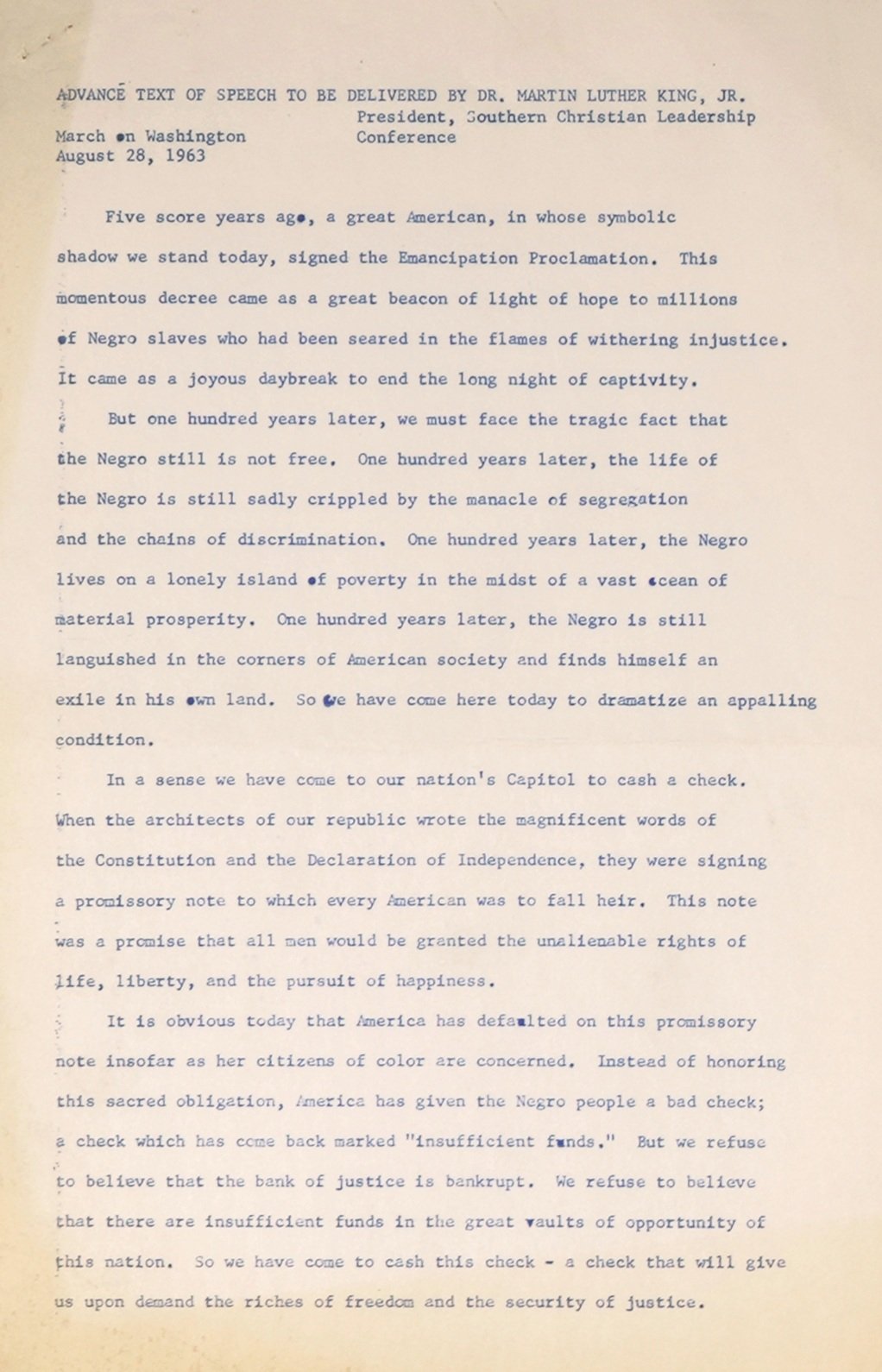
“When the architects of our republic wrote the magnificent words of the Constitution and the Declaration of Independence, they were signing a promissory note to which every American was to fall heir. This note was a promise that all men would be granted the unalienable rights of life, liberty and the pursuit of happiness.
It is obvious today that America has defaulted on this promissory note insofar as her citizens of color are concerned. Instead of honoring this sacred obligation, America has given the Negro people a bad check… But we refuse to believe that the bank of justice is bankrupt. We refuse to believe that there are insufficient funds in the great vaults of opportunity of this nation.…
We have also come to this hallowed spot to remind America of the fierce urgency of now. This is no time to engage in the luxury of cooling off or to take the tranquilizing drug of gradualism. Now is the time to make real the promises of democracy.”
This is a rare first printing of one of the most famous and influential speeches in American history, yet it does not contain the powerful lines for which it is so justly known. Using his innate oratorical skills, Martin Luther King, Jr. delivered the last, most famous segment of his “I Have a Dream” speech extemporaneously.
Officially, Dr. King had a five-minute slot for his speech, but privately, Bayard Rustin and A. Philip Randolph agreed that he could go longer. Watching different films of the speech, we can see that Dr. King was “on script,” frequently glancing down to the advance text until he arrived at the last paragraph. Just then, whether he consciously heard it or not, Mahalia Jackson called out, “Tell them about the dream, Martin.” At that moment, hardly pausing, he looked up and launched into “I Have a Dream.” He didn’t look down again until nearly ten minutes later, when he returned to the advanced text to finish delivering what would become one of the most consequential and famous speeches in American history.
It is fascinating to consider how the speech, as it was prepared, would have been received without the soaring oratory that he extemporaneously added. Even without that passage, the shorter draft conveyed a powerful message: though America had defaulted on the promissory note of the Declaration of Independence, this nation could still rise up and live out the true meaning of its creed: “We hold these truths to be self-evident, that all men are created equal.” We hope that message still resonates today.
“Let us work and march and love and stand together until that day has come when we can join hands and sing, ‘Free at last, free at last; thank God almighty, we are free at last.’”
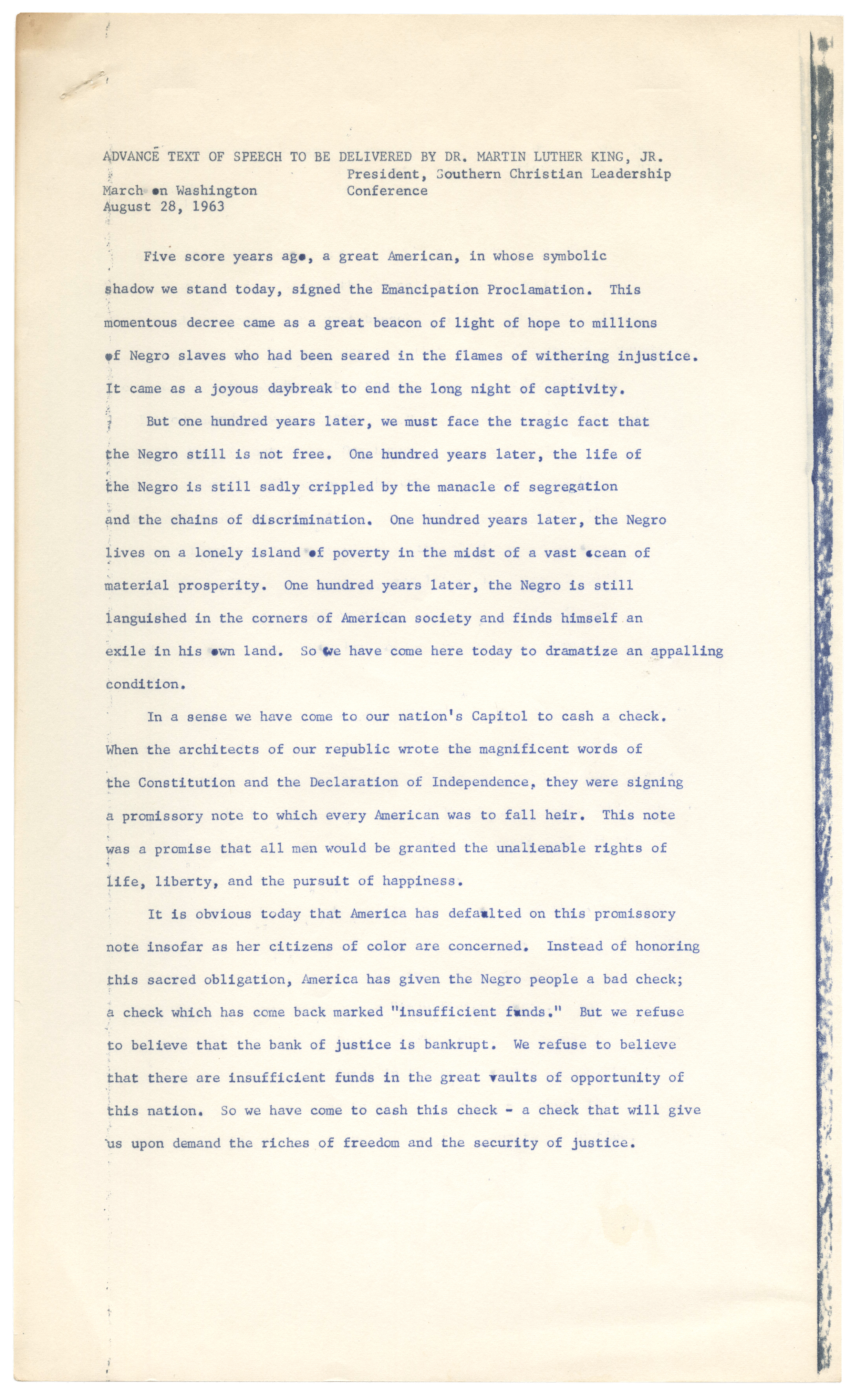
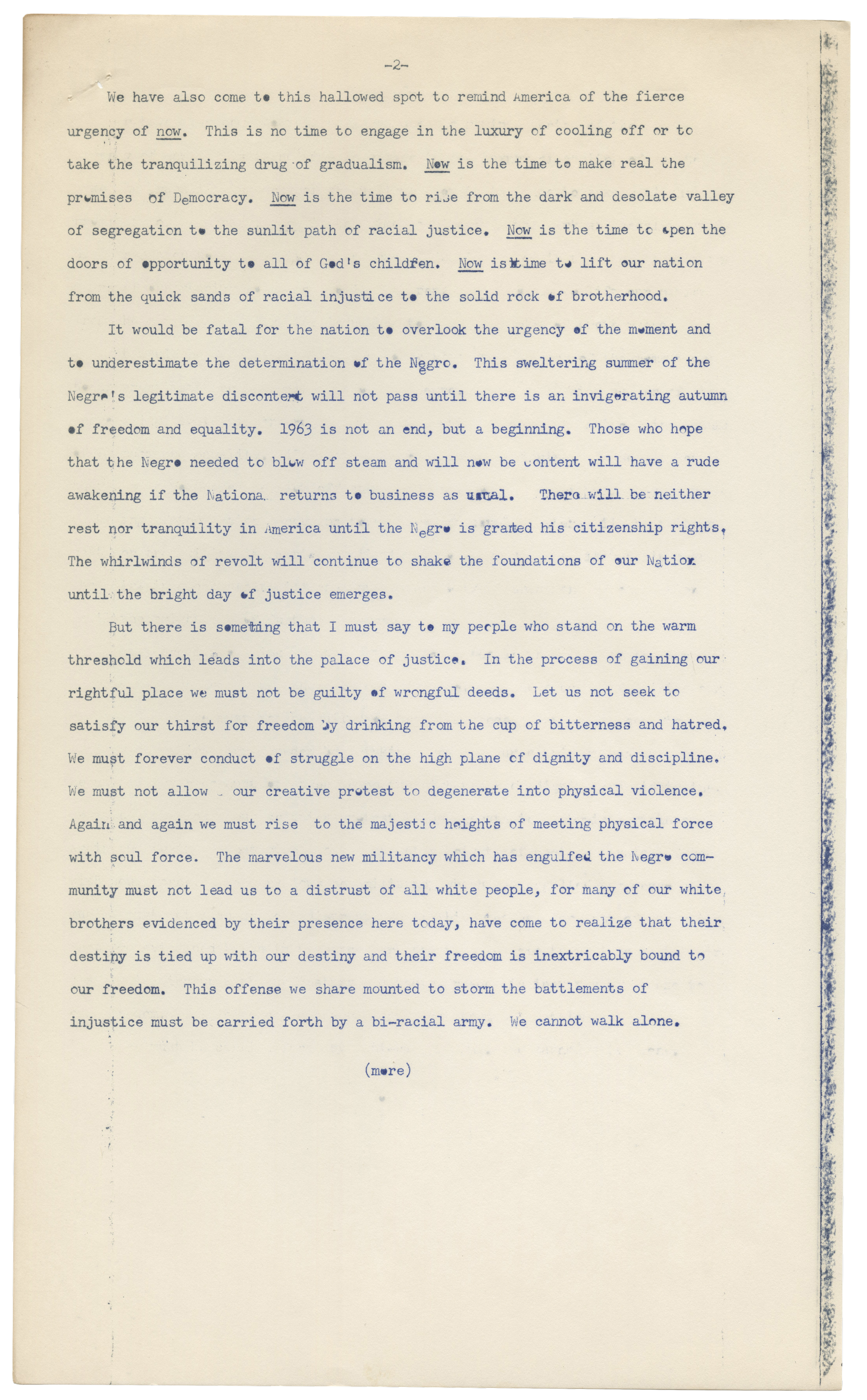

★ MARTIN LUTHER KING, JR., advanced text mimeographed by March on Washington for Jobs and Freedom Press Office between 4 and 7 a.m. on Aug. 28, 1963. #26476